




The Stories of the Old People
By H.F. "Pete" Gregory
In Native American communities, there is a deep sense of identity. There is the family, often the clan, the tribe, and the citizenship in the United States. People identify themselves with those groups, in about that order. Part of that identity is linked to the past, the ways of the old people. In the southeastern or Woodland tradition, those old ways are most often connected to myths, stories, music, and dance. Some Native Americans have objected to calling their traditions "myths" or "legends" because they feel that somehow implies they are less valuable than the oral traditions of others and because they know that their oral traditions are as old or older than those of their non-Indian neighbors. Still, in English, stories seem a good way to generically label oral tradition. It should always be said that the Native American versions are as ancient and sacred as those of the Greeks, Romans, or the Judeo-Christian traditions. Like all the other peoples on earth these traditions explain things, teach people about the truths which hold human beings together as individuals and societies, and reinforce the rules of kindness, love, and etiquette that reinforce all human relationships. Some American Indian people feel so strongly about their traditions that they hesitate to share them with outsiders who might not understand how precious they are or how sacred they really are. So there are things that can be told publicly and others restricted to a much more limited audience. Contrary to popular American cultural perceptions, reinforced by Longfellow's poetic rendition of Hiawatha and numerous children's stories, Native American traditions are not simple recreational stories. They have deeper meanings and are as literary as anything ever created in human cultures.
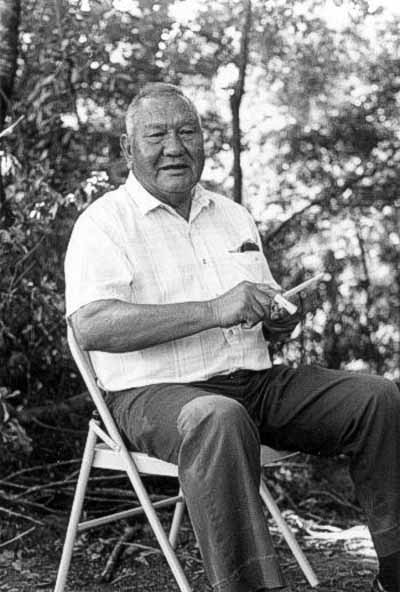
In Louisiana, each tribal group retains its oral traditions and along with people who possess the oratorical skills to present them. While American Indian music and dance are often presented, again care is taken to keep even public performances "pure" and sacred, the telling of stories is equally important. Non-Indians who listen to these old ways should understand that in Indian culture the listener is as important as the presenter. Good listening is cultivated, somewhat as an art among Indian people. Silence is respected, and courtesy is expected. People are taught not to talk while others speak, to pay attention and not to look speakers directly in the eyes. One does not eat or drink during traditional storytelling since the listener's mind is on the food and not the lesson being taught. There are also rules about who can pass-on traditions and to whom. Men tell some things, women tell others. Some, children can hear; and others are for adults only. There are some things that are told only a t night and others reserved for the daylight hours. Like language itself these rules vary from tribe to tribe. Each Louisiana tribe has its own rules and the listeners should anticipate being told the rules on "how to talk and how to listen" much as they have learned in non-Indian culture.
There is in all the southern Indian communities a sort of secular oral tradition: jokes, hunting stories, and just "plain talk" about crops, politics, the weather, and so forth. Just beyond that are the "Rabbit Tales" told to teach respect for the animals and the earth itself and reminding people that all such things are part of a whole--human beings included. In these stories, people learn etiquette and about the animals and plants that must be sacrificed to sustain human existence. They are like gospels, sacred messages sent to explain relationships and obligations. Often these are told by the elders, to children often at night, but sometimes in a seasonal round of stories.
Then there is the "medicine" which explains the human being's relationship to power, never differentiating supernatural from natural power. This includes holistic health, psychiatric principles, and herbal or pharmaceutical knowledge. Inasmuch as this knowledge is very power-laden, and carries much potential for use or abuse, it is seldom considered public information. It is as reserved as non-Indian medicinal or pharmaceutical practice.
There also exists another realm of oral literature more sacred than even the medicine. This traditional knowledge deals with the relationships between humans, both living and departed, and the rest of the universe. Origins, destiny, good and evil are all covered. It is this most sacred realm of oral tradition that Native Americans prefer to keep to themselves. Each derives much of this sacred nature from its own special traditions. This is taught only within the home, usually by the elders, or at sacred times and places where tribal people can limit outside access to this most sacred knowledge.
The Tunica-Biloxi, Koasati (Coushatta), Choctaw, Alibamu, Chitimacha, Houma, Caddo, and Natchez have all left us their tradition in print. Collected by anthropologists, folklorists and linguists, only parts of the traditional knowledge have been passed on by that medium. Native Americans learn a much better integrated system of tradition, their elders are their teachers or professors and the bits and pieces are not as fragmentary as the printed record suggests.
Over the years certain people in the various tribes became well known, both inside and outside tribal areas, for their verbal skills. Well-remembered are Jackson Langley and Bel Abbey of the Koasati; Sesosterie Yuchigan, Joseph Pierite and Joe Pierite, Jr. of the Tunica-Biloxi; Benjamin Paul and Emile Stouff of the Chitimacha; Anderson Lewis of the Jena Choctaw; and Sanville and Mathilde Johnson of Bayou LaCombe Choctaw. The loss of these repositories of traditional knowledge did not, however, signal the loss of cultural tradition in these tribes. Each of these people left a legacy of knowledge, most of which was never "collected" or written down but which continues in the oral traditions of the tribal people.
Today, Marjorie Batisse of the Koasati, Anna Mae Juneau of the Tunica-Biloxi, Nick Stouff of the Chitimacha, and Clyde Jackson and Mary Jones of the Jena Choctaw know and share their secular traditions with outsiders, sharing their sacred knowledge only within the confines of home and tribe. They bring their verbal skills to festivals and to schools in hopes that some Native values will be shared with non-Indians and that that will foster cross-cultural understanding of the American Indian communities they represent.
It should be noted here that these are not the only people in these communities who possess knowledge and skill. It is not considered polite to raise people "above others" and none of those listed here would be comfortable with such "stardom." They all know and respect the fact that they represent a whole community and feel deeply the responsibility that implies. They are most reticent about their own skills and knowledge, and the non-Indian people who listen to their stories should respect their position. The person who speaks always has power, words are always respected because they can be kind or hurtful, good or bad. So words are carefully chosen, stories carefully told, and these representatives of tribal tradition respect that.
So the Louisiana Indian communities have maintained their traditional relationships. Language, speech, and oral literature hold them together as much today as they did when the animals and humans could speak to one another, as they did when the Giver of Life say they emerged onto the surface of the Earth.
Listeners be aware! These are not always stories to be merely entertaining. There is always more there than that, even the "Fun" stories can teach lessons.
Meet Rabbit, Bear, Turtle, and others. Watch alligators greet the seasons, listen to the ways the birds speak. There is much for all to hear, to learn, to teach. These who bring you knowledge are, at least for the time of telling and listening, sacred people with words in their mouths.
Listen, too, for the rules of storytelling and watch the hands of the speakers because sometimes these speak was well. There are rules for ending stories, but sometimes the stories told are only excerpts from much longer narratives. At times, the storytellers have difficulty deciding just when and where to stop a story. If the listener is attentive they will recognize that and should know they have only heard a slice of a longer and more complex narrative, comparable to hearing a quote from Biblical scripture. These unique "sound bites" are tantalizing and make the informed listener want to know more, to hear more, and the more traditional storytellers will have let one know that they have not "told everything" and that you should "tune in again" at some other time.
Silence is highly regarded in Native American culture and non-Indian people should respect that. It has a place in the role of the listener, just as it does in the role of the narrator where one must sit, gather composure, organize the words, and get the attention of the listeners. Silence implies something is going on in people's heads and not that nothing is happening. The Louisiana Native Americans have much to teach their neighbors and have already loaned their rabbit tales, hunting stories, and even mythic beings like thunder and lightening to the rich oral tradition of their Euro-American and African American friends and neighbors. Come, listen to the stories, and understand that you may find some of your own traditions are older and more cherished in Native American culture than you were ever aware.
