




Gospel Music in Louisiana
Adapted for classroom use by Jane Vidrine
The religious themes of gospel music resonate throughout Louisiana, among blacks and whites alike, in both the predominately Protestant north and the predominately Catholic south. White gospel groups are rooted in British-American musical traditions, and tend to represent fundamentalist Protestant denominations. Black gospel, heard in Catholic as well as Protestant churches, evolved from the African-rooted ante-bellum traditions of spirituals and ring-shouts. It also bears the imprint of a late 19th-century style known as jubilee singing, which incorporated various European elements.
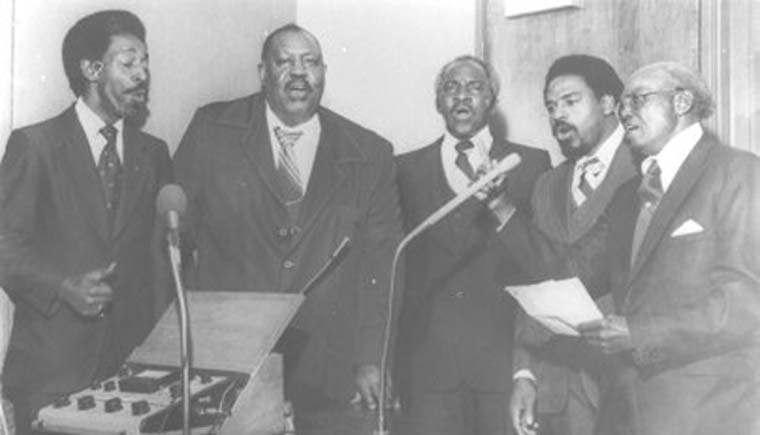
Louisiana's African-American gospel traditions encompass a range of styles. Solo singers such as the late Mahalia Jackson, of New Orleans, inspired listeners with their religious fervor and pure vocal power. Jackson used many time-honored African-American musical traits—including call-and-response, syncopation, bent and slurred notes, growls, and screams—all of which are also heard in blues.
The classic gospel quartet sound combines these effects with elements of jubilee singing. This approach makes exquisite use of four-part harmonies, sung in different registers that maximize the effect of the contrasting voices. The quartet sound, as practiced by distinguished groups such as Shreveport's Ever Ready Gospel Singers and The Zion Travelers from Baton Rouge, has also exerted great influence on secular R&B. Many quartets perform a cappella, with no instrumental accompaniment; others use bass and drums, electric guitar, and keyboards. This instrumentation is also used to back up rousing gospel choirs that may include dozens of singers.
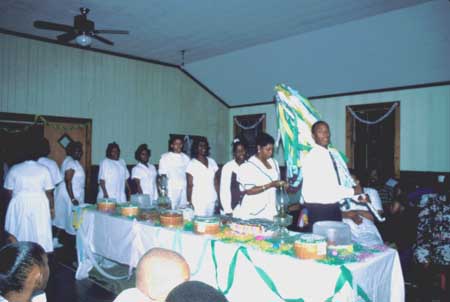
One of the most striking manifestations of African-American gospel music in north Louisiana is Easter Rock—a ritual ceremony using traditional folk movement and folk music. It is still held in the Original True Light Baptist Church in Winnsboro, in Franklin Parish. Dating back to ante-bellum times in the Louisiana Delta region, but relatively unknown outside the area, the Easter Rock service has been performed for generations on the Saturday evening before Easter Sunday. As the congregation sings hymns, participants take rhythmic, reverberating steps from side to side while moving in a circle around a table in the church aisle. At the end of the rock ritual, the food on the tables is served to the congregation. In the past, the Easter Rock service traditionally lasted until midnight, but today it often ends earlier because members attend a sunrise church service on Easter morning.
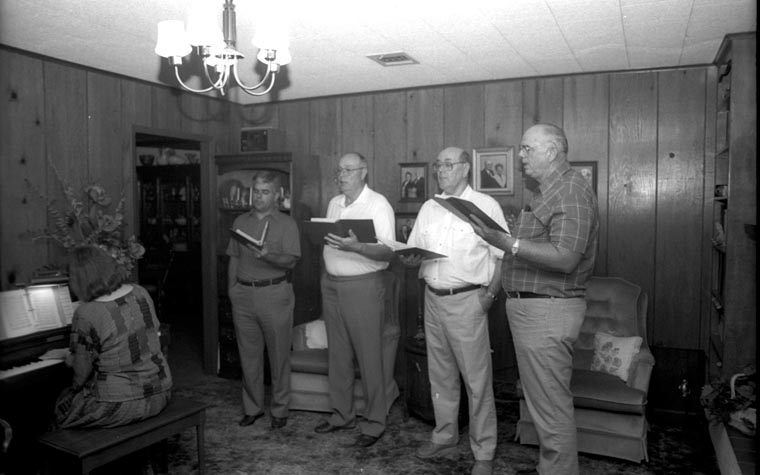
Another striking folk-practice in Louisiana gospel music—both African-American and British-American—is shape-note singing. This a cappella style, found in some Protestant congregations, is based on a simplified system of musical notation. Instead of reading music by the placement of the notes on the staff, shape-note singers sound out the tune by reading the shapes of the notes. There are two systems of shaped notation. The older Sacred Harp system, named after a book by that name, uses only four syllables (fa, sol, la, and mi) in the musical scale, with each of these syllables having its own shape. The newer seven-note system (using do, re, mi, fa, sol, la, ti) is more commonly used in North Louisiana today.
Try this activity by yourself or with a partner to see how well you can use context clues to understand new words.
Instructions: Read the article above. Highlight important words (keywords) or words that you do not know. List them below.
