




Carnival, Feast Days, and House Parties: Cuban Celebrations in Louisiana after 1960
By Tomás Montoya González with contributions by T. Ariana Hall. Translations by Lori N. Tyler and T. Ariana Hall
Cuba has been greatly influenced by its strong connections to Spain and Africa, both of which have strong celebratory traditions that go back thousands of years. Specific groups from Spain and Africa brought their traditions to Cuba, and this combination of diverse influences formed the unique, cohesive system that is "Cuban culture." Festivities are a fundamental part of the Cuban cultural system. Music and dance, two outstanding facets of Cuban culture, are inextricably linked to a variety of celebrations.
The core celebratory occasion in Cuban culture is the party, whether held at a home or as a community event. Despite their tremendous cultural importance, parties are rarely studied by Cuban researchers. According to the venerated Cuban cultural researcher Fernando Ortiz in his 1913 article "Fiestas populares" ("Popular Celebrations"), "It is a curious thing for those who pursue—even from afar—sociological studies to note the careless treatment of popular celebrations. . . . It seems forgotten in an attic of intelligence without having merited the positive regeneration that has reached other sciences as archaic as alchemy and astrology" (Ortiz 1913).
Celebrations may be better understood with some background information on Cuban migration, politics, and religion. After the Cuban Revolution in 1959, many Cubans moved to the United States for a variety of reasons, all of which had political, economic, and class underpinnings that can be analyzed through the lens of generations, gender, race, and other sociological factors. Three main groups of Cubans migrated to Louisiana: the 1960s group, the 1980s group (Marielitos), and the 1990s group (Balseros). The 1960s group is made up of people leaving Cuba, right after the 1959 Cuban revolution led by Fidel Castro. A variety of people were fleeing the island at that time: individuals who were part of the previous government, property owners whose holdings were being seized by the new government, and many middle- and upper-class residents who feared the rapid changes that were taking place. The majority of these immigrants were white. The group that came in 1980 is commonly referred to as Marielitos, since they left Cuba through Mariel Bay in 1980. Many Marielitos were black. The group that came in the 1990s is commonly referred to as Balseros. They left Cuba on boats and rafts in the mid 1990s. They were black and white, predominantly younger Cubans fleeing Cuba's economic crisis of the early 1990s. Balsero means "Rafter."
Although each of these groups came from Cuba, their class, ethnic, religious, and generational differences tended to distinguish them socially in Louisiana. While the three groups do come together for many common traditional celebrations, some celebrations have special significance for one or more of the migratory groups. The first group of Cubans who migrated in the 1960s, having been separated from Cuban reality for more than four decades, maintain cultural references from the time of their departure. Many never returned to the island. They became culturally distanced from the future waves of Cuban immigrants that arrived in the 1980s and 1990s. In a similar manner, Cuban immigrants who came in the 1980s and 1990s were also culturally distanced from deep-seated pre-1959 Cuban cultural traditions, especially of a religious nature. Salvador Longoria immigrated to Louisiana with his parents and his sisters when he was 4 years old in 1963. He says that for his parents, "The Cuban culture that they taught me was pre-revolutionary Cuban culture. . . . For them, Cuba ended in 1958, 1959, or 1963 . . . and what we have lived from that time until now has been something from their memory and from the heart that they wanted to share with us, but it does not have a basis in reality."
The Revolution of 1959 introduced atheism, which eliminated many of the religious traditions from the Cuban cultural context, fundamentally those related to Catholicism. The dominance of the Catholic Church over Cuban national culture began with its imposition by the Spanish colonial government and continued with its permeation of core cultural traditions and the collective psyche.
The confrontation between Church and State was a central theme during the construction of Cuban socialism. To date, the Church has not been able to regain its privileged pre-1959 role in Cuban society, although there have been many changes since Pope John Paul II's visit in 1998 favoring the rebirth of some traditions, such as the celebration of Christmas. Yenima Rojas, who came to Louisiana in 2000, says, "My generation in Cuba did not celebrate any of that stuff, like Christmas . . . since we were under a regime that always harassed the Church, we didn't do anything until the Pope's visit." So Cubans who settled in Louisiana come from a variety of different backgrounds when it comes to what they celebrate. As a result, while some celebrations are observed by all Cuban immigrants, others are unique to one of the three groups—the 1960s group, Marielitos, and Balseros. A look at the celebrations of each group shows the similarities and differences.
Although the newer Cuban immigrants from the 1980s and 1990s differ, in many instances, from the 1960s immigrants in how and what they celebrate, both groups often coincide in the ways they celebrate and what they celebrate. All of the immigrants identify themselves first and foremost as Cubans and operate within the basic parameters of Cuban culture. All three waves of Cuban immigrants share many celebrations including those that are religious, patriotic, and domestic events as well as American holidays that have been adapted by the Cuban community.
Acculturation To Life In Louisiana
Many Cuban émigrés from the1960s, 1980, and 1990s migratory waves, decided to settle in South Louisiana because they could relate to the importance of celebrations in Louisiana life. They enjoyed how friendly people are with each other, the passion Louisianans have for music, dance, and food, and a Mardi Gras. South Louisiana is a region where people laugh easily, seem to fight when they talk, and walk slowly and with a danceable cadence as if morning does not exist and there is always time for the future. This does not seem to happen in Miami; it is something characteristic of Cuba and of Louisiana, particularly the area where the Mississippi River empties into the Gulf of Mexico on its way to the Caribbean Sea.
The majority of the 1960s group came to Louisiana because of ties with family and friends who were here. Public festivities and atmosphere influenced their decisions to stay here. Salvador Longoria said, "The culture in Louisiana, out of the entire U.S., is the most similar to Cuban culture. . . . Cubans feel at home here." María Teresa González echoed this, and said "I like New Orleans because culturally you can find everything." Bethsy Pizarro a pre-Katrina resident of St. Bernard said, "I fell in love with the place when I came here. It was as if I had returned to Cuba." Mario San Román said, "Of all the cities [in the United States] the one that I like the best is New Orleans, aside from Florida. . . . New Orleans is charming. New Orleans food is like no other, . . . so many festivals."
Although the 1960s Cubans that settled in Louisiana are attracted to the socio-cultural values in Florida, they decided not to go to Florida and join the largest Cuban community outside of Cuba, despite the prevalence of Spanish speakers and Cuban cultural traditions there. They agree that they are more at ease culturally in Louisiana. Salvador Longoria explains, "People here work to live well, enjoy life, go to Carnival. . . . In Miami, there are more Cubans, but the way of life in Miami is like New York. . . . The way of life in Louisiana is like Cuba."
Nevertheless, the social conditions that the 1960s group found in Louisiana were not always favorable. Language, economic structures, and race relations were some of the initial obstacles to integrating into Louisiana culture. They were the "other." In order to survive as individuals and as a group, they had to quickly overcome these inequalities and incorporate new traditions while maintaining their own traditions. They could not, and did not want to, detach themselves from the spiritual and material aspects of their culture.
The first wave of Cuban immigrants who arrived in the 1960s observes many sacred and secular festivities. Cuban immigrants from the 1980 and 1990s groups celebrate many of the same sacred and secular festivities with some key distinctions that are discussed throughout the essay. Starting the year are New Year's Eve and New Year's Day celebrations, closely linked to Christmas and January 6 celebrations. January 6 is King's Day or the Epiphany. January 28 is the birthday of national hero José Martí. The Martí dinner is one of the most popular social celebrations in the New Orleans Cuban community. This event celebrates Cuban patriotism and is still actively attended. February 14, Valentine's Day is one of the most revered holidays in Cuba. Cuban celebrations during New Orleans' Mardi Gras are inspired by Cuban Carnaval traditions. Then comes Mother's Day, the second Sunday of May, and Father's Day, the second Sunday of June. On May 20 is Independence Day or the birth of the Republic in 1902. This patriotic holiday is celebrated with group social functions. On September 8 is the feast day of La Caridad del Cobre, the Virgin Mary as Our Lady of Charity.
Religious Celebrations
The 1960s group found themselves living in a Catholic society and felt at ease with their religious festivities like Christmas and Easter. Cuban immigrants who came to Louisiana in 1980 and throughout the 1990s also celebrate many common Catholic holidays like Christmas, and Easter.
Christmas Eve is a private, family gathering within the home with all kinds of food and drink. In socialist Cuba, Christmas Eve escaped being marked as a religious holiday and, despite some difficulties, was able to survive in the atheist environment. Despite not being an official holiday in socialist Cuba, Christmas day celebrations had such a strong impact on the cultural psyche, that it was not strange or contradictory that Cubans from the 1980s and 1990s resumed Christmas day celebrations in the United States. It makes sense that this very family-oriented holiday could not be deconstructed as easily by the socialist government as could other holidays of a more historical or political nature. The official celebration of Christmas day was reinstated in Cuba after Pope John Paul II's visit in 1998.
An important religious holiday for the Cuban community in Louisiana is the feast day for La Virgen de la Caridad del Cobre (Our Lady of Charity). Despite its religious significance, celebrations of the Feast Day for La Virgen de la Caridad del Cobre on September 8th have survived in socialist Cuba since 1959. Some consider these to be the biggest Cuban celebrations in the Louisiana Cuban community because of the large number of participants and the symbolic importance for the community. La Virgen de la Caridad del Cobre is the patron saint of Cuba. She is a mixed race virgin figurine that was found in waters off of Eastern Cuba, and she protects issues to do with love, fertility, childbirth, and material prosperity. The mass for her feast day is celebrated at churches in and outside of Cuba, with songs, and sermons dedicated to her and dedicated to the well-being of Cuba.
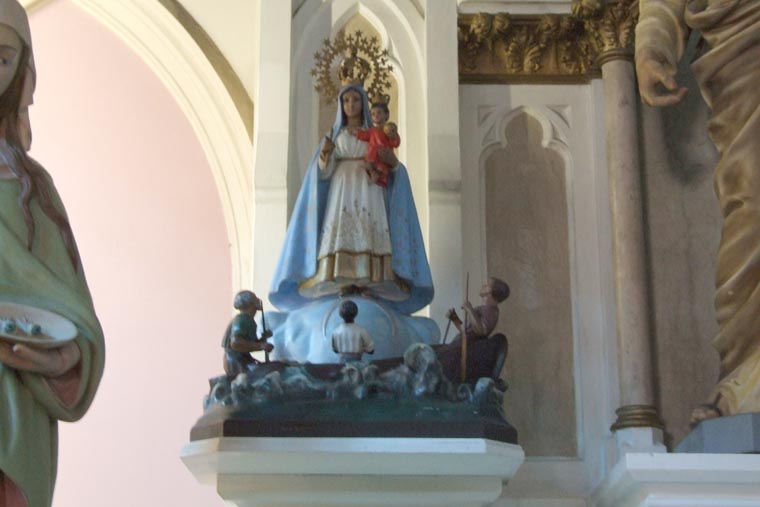
Inside St. Teresa of Avila Church, or Santa Teresita as some call it, at 1404 Erato St. in New Orleans, Louisiana, is an image of La Virgen de la Caridad del Cobre. Historically, Fathers Teodoro Agudo and E. Miguel have held special masses for La Virgen de la Caridad del Cobre on September 8. There are also special masses for la Virgen de la Caridad del Cobre at other Catholic Churches across the state, like St. Anthony of Padua and St. Jude Churches in New Orleans, and St. George Church in Baton Rouge. Although these masses have particular importance for the 1960s group, members of the other two migratory groups also attend. These Spanish-language masses are important social events that strengthen the congregation and preserve Cuban cultural traditions.

Vivian Nieto says that out of all the Cuban holidays "the biggest holiday that Cubans celebrate is for [La Virgen de] la Caridad." This day of religious and community veneration is one of the most widespread Cuban festivities. There is another level of symbolism for this Cuban holy day, especially for Afro-Cubans and younger Cubans who migrated in the 1980s and 1990s. La Virgen de la Caridad del Cobre syncretizes with veneration of the Yoruban deity Oshún, giving a dual function to the September 8th celebrations. Geovanis Palacios affirms that in Cuba "when people do initiation ceremonies for Oshún, some people put up images of La Caridad del Cobre . . . but it has nothing to do with Catholicism." Oshún is a goddess from the Yoruban culture, venerated by the slaves who arrived in Cuba during the Spanish colonial period from sub-Saharan West Africa. Oshún is considered the keeper of money, corals, and love.
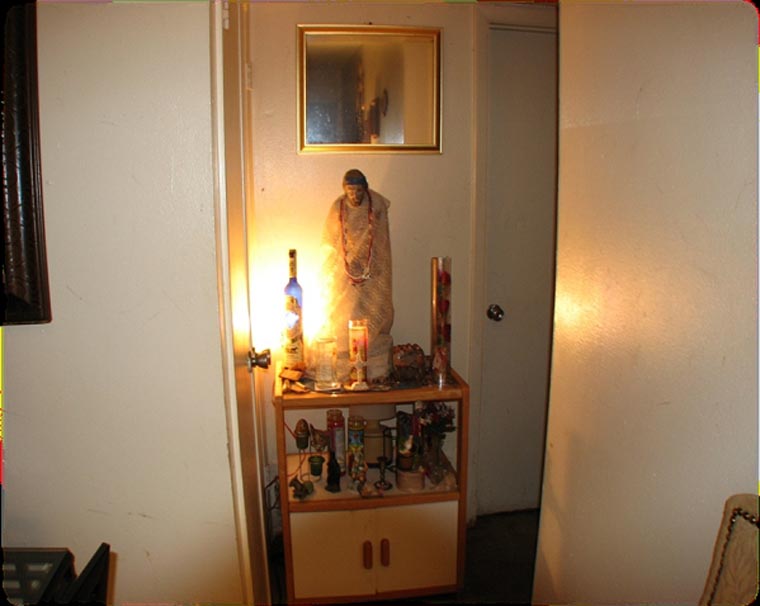
In the homes of Cubans who emigrated post 1980, it is common to see Afro-Cuban religious objects like devotion altars to Baba-lú-Ayé, Oshún (who syncretizes with la Virgen de la Caridad del Cobre), Obatalá and other deities from the Yoruba pantheon. For example, Cuban musician José de Páez has an altar to Baba-lú-Ayé in his living room.
Many post-1980s immigrants also use Afro-Cuban religious garb as a type of personal adornment. The religious and aesthetic connotations reinforce and protect their cultural identity and well-being.
Patriotic Celebrations
The period of Cuban Republicanism, 1902 to 1959 when Cuba was a semi-independent republic as a U.S. protectorate, shaped the 1960s group's values and political and historic celebrations. Many of these have not been celebrated in Cuba since 1959. A prime example are May 20th celebrations commemorating the National Day of Independence, when Cuba declared itself a republic in 1902 after the Spanish-Cuban-North American war of 1898, commonly referred to in the U.S. as the Spanish-American War. People who grew up in Cuba after the 1959 revolution were taught that that May 20th is a negative day in the country's history because Cuba was passed from Spanish authority to North American authority. From this point of view, Cuba was not independent, but a semi-republic. Vivian Nieto explains the celebrations of her group:
The Cuban of the 1960s and 1970s has a lot of patriotic celebration: . . José Martí's birthday, . . . the independence of Cuba on May 20. . . . The newly arrived Cuban doesn't care about Martí's birthday, and doesn't celebrate the 20th of May. . . . It's a new mentality because they grew up in a system that is different than the one we grew up in. . . . They enjoy the parties, . . . but in reality it's a different upbringing.
As a result, the younger generations do not celebrate the 20th of May. Its symbolism has changed in their collective memory, because they grew up commemorating other historic occasions like the anniversary of the triumph of the 1959 revolution on January 1, which was established as the "true" independence day; May 1 for International Workers' Day; and July 26, the anniversary of the attack on the Moncada barracks, when Fidel Castro and his young followers tried to take over the military fort by force in 1953. This historic event began the Cuban revolution that ended in 1959 with the victory of the rebels. It is widely celebrated since 1959, as the Day of National Rebellion.
New Year's Eve and New Year's Day, December 31 and January 1 are family celebrations, where friends and neighbors gather for food and drinks. With January 1 also commemorating the anniversary of the triumph of the 1959 Cuban revolution, this created an even larger celebratory context for Cubans from the younger generations.
Younger Cubans show less inclination toward ideological celebrations. Geovanis Palacios, age 40, commented about these celebrations that younger Cubans do not celebrate. "The 20th of May is a front . . . . People in Cuba don't celebrate it. . . . Here the older white Cubans celebrate it because they see it as a victory . . . . They don't even call me for these parties. They don't even let me know about it even though they know me." Some of the elders hold the belief that the younger generations are apathetic about these traditions and endanger their survival since the older generation, which upheld these traditions for over 40 years, is passing away.
There is a similar situation with the celebrations for Cuba's national hero, José Martí. He has become a politically charged symbol for both the Cuban Revolution and the Cuban exile community. Right now, the celebratory dinner for José Martí's birthday on January 28 is the oldest social gathering for the greater New Orleans Cuban community. Once again, the organizers and principal participants are from the elder generation. The majority of newer immigrants from the 1980s and 1990s are not interested in this celebration, because of ideological issues and other issues to do with racial and generational change.
Bethsy Pizarro reveals more about this topic:
The Cubans that came here in the 1980s and 1990s resented Martí, and I asked "Why?" . . . To the Cubans . . . who came later, he is seen as a communist leader or of the system that they knew. . . . For those of us who were born in the 1940s and 1930s, he was the leader that saved us . . . from being a colony. It's the same person, but people look at him with different ideologies.

At the annual Martí Dinner, Cuban émigrés commemorate the anniversary of the birth of this national hero. The 2008 celebration was held at Churros Café in Metairie. Bethsy Pizarro, one of the event's principal organizers who came to Louisiana in the 1960s, is widely-known and respected because of her efforts to unite, promote, and maintain Cuban culture in South Louisiana. Vivian Nieto is another principal organizer of the Martí Dinner. She and her husband are co-owners of Churros Café. Geovanis Palacios, a 40-year-old Afro-Cuban who came to the U.S. in 1994, noted that he was the only black man at the Martí Dinner. Palacios analyzes this racial issue as "there are few Afro-Cubans here [in New Orleans] from 1990s or later and a few from the 1980s. . . . The majority of black Cubans go to the North—New York, New Jersey, California." His comments underline the race, class, and generational issues at play in the local Cuban community.
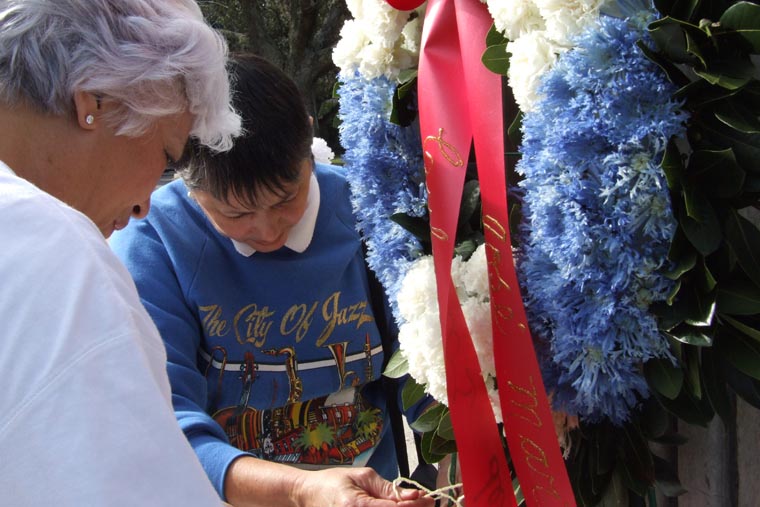
At the Martí Dinner the participants sing the national anthems of both Cuba and the United States in English and recite a Catholic prayer for Martí. This would be unthinkable in modern-day Cuba given the ideology of the Cuban Revolution. Cuban culture diverged on the island and in the Exile community after 1959. The new value system of the Cuban socialist government created new historical and ideological perspectives as well as new aesthetic and ethical norms, which marked whole generations of younger Cubans. This resulted in divergent cultural experiences, collective memories, ways of interpreting history, and, in the end, divergent methods and reasons for community celebrations. This does not mean that the younger immigrants do not participate frequently and in sizeable numbers in some of these activities. Rather, the symbolic connotation of these events is different for each generation, as is the establishment of any particular event as a priority or a celebration. Vivian Nieto, a member of the 1960s generation, gives her opinion of why the younger immigrants participate in these celebrations: "In reality, most participate not because of the significance of the event . . . but because they get homesick for what they left behind and look for any reason to get together and have a little fun."
Domestic Festivities And Parties A Lo Cubano
Domestic celebrations such as birthday parties, quinceañeras, marriage anniversaries, El Día de los Enamorados (Valentine's Day), baby showers, and house parties have been important for maintaining Cuban social networks for all three waves of immigrants. These gatherings always feature music, dance, and inevitable loud and lilting conversations in Spanish, just like parties in Cuba. Some of these activities have become more important in recent years, and others have decreased as a result of the disappearance of certain organizations and public spaces that facilitated community cohesion and attracted new generations.
Several domestic family celebrations are important, including quinceañeras, birthday parties, and informal gatherings. Quinceañeras, the celebration of a girl's coming of age at 15 years old, is still strong to date in Cuba. Years ago, quinceañeras consisted of dancing waltzes. But in Cuba of the 1970s, it became fashionable to do popular dances such as Casino, which is similar to Salsa. Now in Louisiana, the parties incorporate U.S. music and dances that are popular amongst young people. Bethsy Pizarro mentioned that in the 1960s and 1970s, before becoming ordained, Cuban priest Father Pedro Nuñez organized quinceañera dances in the South Louisiana Cuban community. Now quinceañera's incorporate current popular music like reggaetón, pop, and hip hop.
Dina Buchillón, who came to the U.S. in 1980, says, "There is a social club formed mostly by members of the group of the 1960s. I am a member of that club, too. It is a very traditional club. We celebrate things like Cuban Independence Day and Mother's Day in Lafreniere Park."
Many of those who arrived in the 1960s explained that now they only see each other at wakes or an occasional birthday party. Some Cubans in the Baton Rouge area agreed that opportunities to interact as a community are rare, except for some events held at St. George Catholic Church. This is, in part, due to Cubans being a much smaller portion of the Baton Rouge community.
Children's birthday parties in Cuba also include components specifically for the adults. Sometimes the party may even seem to really be a party for the grown-ups. And adult parties may seem more geared towards the children. In other words, house parties organically bring together the entire family, usually with an uproar of music, passionate conversations, dancing, traditional food, and a variety of drinks. Birthday parties feature live Cuban music, food, and dancing, underlining the basic fun-loving nature of Cuban culture.
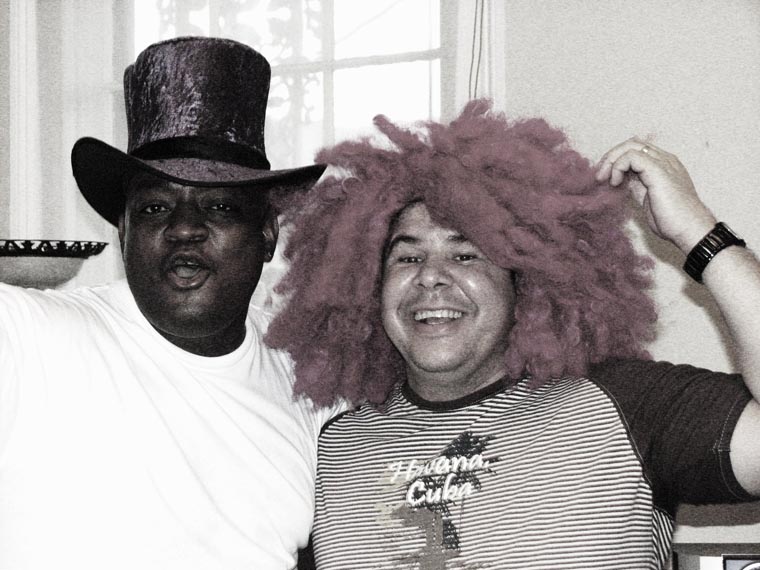
Cuban immigrants have also embraced the American celebration of baby showers, a party for the expectant mother before the baby's arrival. In Cuba the tradition is different, with a party for the mother after the birth of the newborn. A special drink called aliña'o is shared among everyone at the party. According to Noel González, aliña'o is "a fruit cocktail that has been aged for nine months. Once the family knows the due date, they put alcohol in a large crystal carafe and every week they add seasonal fruit, sugar cane, grapes, whatever they can find. Bethsy Pizarro adds ". . . [in Cuba,] we don't have baby showers. But we did celebrate bachelor's parties (in Cuba)." She also confirms that in Cuba there were bachelorette parties as well.
Cubans in New Orleans also gather informally for games, house parties, and at barrooms. Newer immigrants maintain a passion for playing dominoes, gathering at each other's homes. These gatherings around the dining table usually incorporate music and alcohol and can overcome radical differences amongst the players, while they debate current events, and joke about all that is sacred and conventional. Traditionally, dominoes have been a male-dominated game, but over time it has become open to female players.
With or without dominoes, house parties are important sources of contact between Cubans. Yenima Rojas says,
When you arrive in a new place, you look for friends. . . . We found some friends from our own neighborhood back in Cuba, and we would go over [to their house] to play dominoes. . . . They brought their essence, and one keeps it up, maintaining the same things [from before], the same games, seeking out the same things that we heard in Cuba like TV channels where you can see things from Cuba.
In the past, another type of informal gathering was common. Peleas de gallos (cock fights) were popular in Cuba before 1959 and later prohibited during the revolutionary period. However, the Cubans that immigrated in the 1960s continued this male-dominated practice until the 1980s.
Cubans from all the generations also gather in bars for drinks and conversation and in Latin night clubs to dance to Cuban music and at the ever-decreasing Latin festivals, as well as the occasional Cuban music concert. These public gatherings were, and are still today, some of the most common ways that Cubans come together.
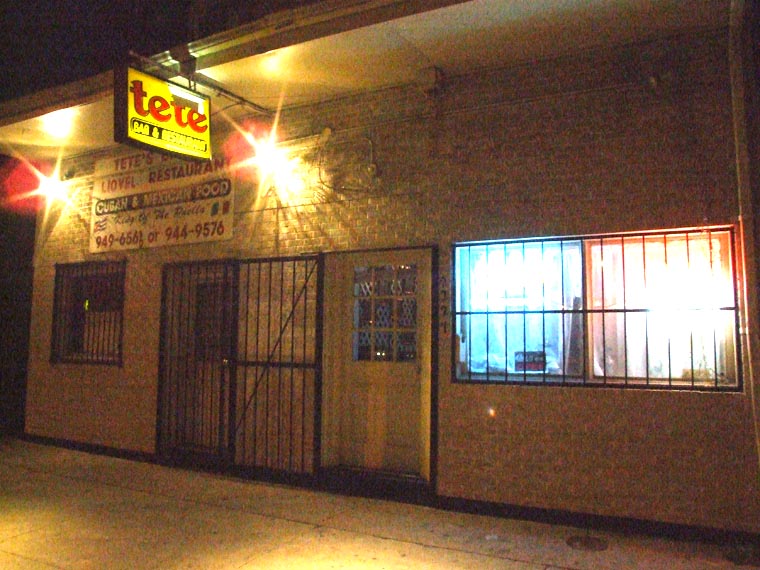
Teté's Bar is situated on St. Claude Avenue in New Orleans. This once-bustling neighborhood was home to a small but dynamic Cuban community in the 1980s, including small business owners small-business owners like Leobel Granado, the owner of Teté's. The Cubans who lived in the neighborhood at that time were mostly Marielitos who immigrated in 1980.
Bars like Teté's played an important role in maintaining contact between the members of this community, but as time went on, many things changed. According to the owner, few Cubans pass through Teté's anymore because many of the neighborhood regulars did not return to New Orleans after Hurricane Katrina in 2005. However, new places and events are appearing, such as the concerts and parties organized by the CubaNOLA Arts Collective, an institution that explores the cultural connections between Cuba and New Orleans, Louisiana. Some bars in Kenner, Metairie, and New Orleans offer a consistent variety of Latin and Cuban music where more and more (usually younger) Cubans go out.
Mardi Gras, American Holidays, Foodways And Home
Another interesting phenomenon is the acceptance and recasting of new traditions that Cubans found in the United States of America, particularly in Louisiana.
Cuban immigrants especially connected with the Louisiana Mardi Gras, which included similarities to Cuban Carnaval such as parades, costumes, and floats. Cubans are drawn to Mardi Gras festivities, since Carnaval is part of the annual cycle of celebrations where "ordinary life" stops and "Carnival life" begins. The everyday order is taken over by a celebratory social atmosphere. In Cuba, a comparsa is a group of people that participate in Carnaval parades of public festive activities. They dress in costume and dance while accompanied by musical Conga groups, who play percussion and wind instruments, as well as Afro-Cuban rhythms. Humberto "Pupi" Menes states, "The folklore of Louisiana has a lot in common with Cuban folklore. . . . You don't find this in Florida or Chicago. . . . Second lines here are the same as comparsas in Cuba. . . . The only place [in the United States] where you find this flavor and ambiance is here [in New Orleans]."
Vivian Nieto comments, "Some Cubans complained about adapting in other places. . . . I didn't find that problem here. . . . I love Mardi Gras. It's very similar to our traditions."
Cubans in South Louisiana have successfully recovered a tradition almost forgotten on the island: the use of costumes in Carnaval and domestic celebrations. Mardi Gras, with its abundant use of costumes, reflects what was traditionally found in Cuban Carnavales in the past. Carnival masking helped the south Louisiana Cuban community to connect with collective cultural memories.
Mario San Román, who came from Santiago de Cuba when he was nine years old in 1969, recalls that "[in Cuba], Carnaval was a big deal. . . . Many people with costumes, people dancing in conga street parades, playing music. . . . Here the people make a big deal with 'Mardi Gras, Mardi Gras, Mardi Gras!', . . . but for people who've seen Cuban Carnaval —now that is a real Carnival, . . . like what I remember."
As Ailene Cabrera says, "I actually adopted new celebrations in my life from American culture. For instance, in Cuba I never celebrated Christmas Eve or Thanksgiving. But here, I do it every year and I love it. Whenever there is food, party, people, and music, I am there. I love it no matter whose culture it is from." In addition to Mardi Gras, with the festive display similar to Cuban Carnaval, Louisiana's endless bounty of festivals plays into the naturally festive nature of Cubans. Cuban immigrants enjoy the local St. Joseph's Day, St. Patrick's Day celebrations, and Fourth of July festivities.
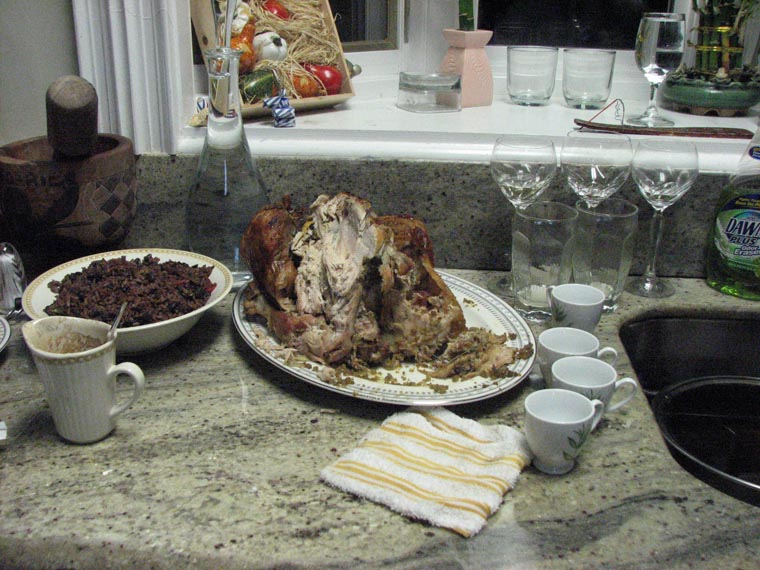
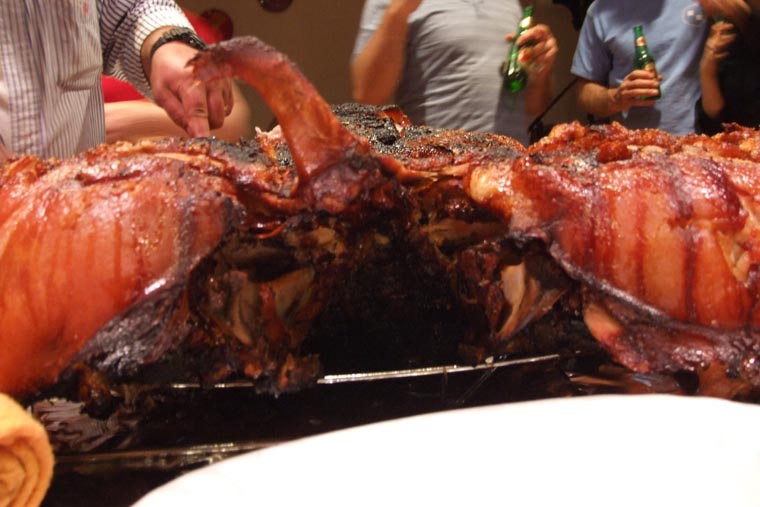
For the 1960s generation, the Fourth of July holiday holds more patriotic meaning while the 1980s and 1990s generations enjoy getting together for a party, without discounting the patriotic meaning of the holiday. Cubans have adopted the Halloween masking tradition, but listen to Cuban music while costumed. Cuban Thanksgiving celebrations bring families together through cultural expressions including food, music, lively conversations in Spanish, dancing, dominoes, and more. Instead of, or in addition to, turkey, they prepare roasted pork, yuca, congrí, and other traditional Cuban foods. "For Thanksgiving, we mix everything. We make turkey, congri, yuca, and other things," explains María Teresa González who came to Louisiana in 2005.
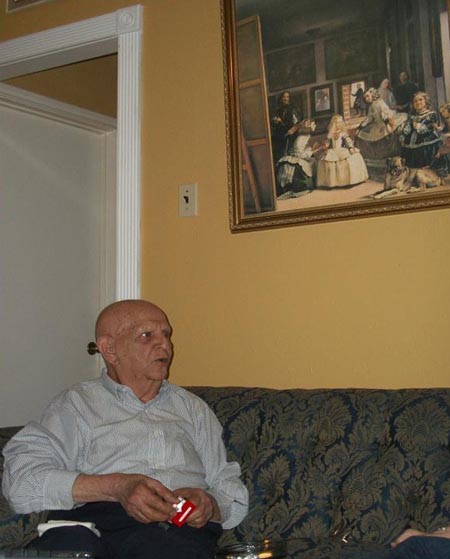
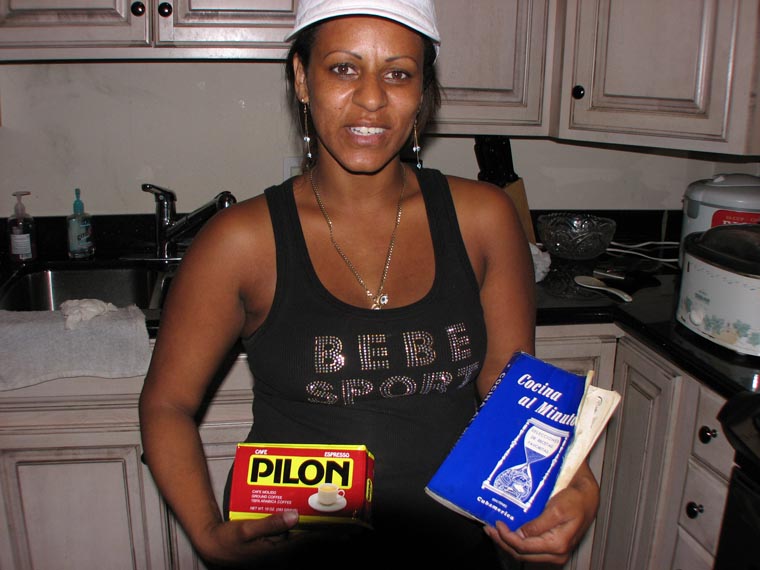
In most Cuban homes the women use and closely guard the classic Cuban cookbook, Cocina al Minuto. Ailene Cabrera said, "I don't have any difficulties finding the ingredients I need to cook Cuban food, since our food is made with very basic ingredients. The seasoning is what gives Cuban food its character." Latin grocery markets provide some of the harder-to-find ingredients. It is common to find Cuban homes decorated with Cuban art, photographs, posters, historic documents, and national flags—a mix of icons that represent Cuban heritage and symbols that represent U.S. culture.
Upon arriving in Louisiana, Cubans insisted on continuing to speak Spanish in their homes and use the language as means of passing cultural traditions to younger generations. Often gathering together to celebrate in their homes, the home and the family become a sphere of "cultural resistance." As members of the non-dominant culture of the region, Cuban families often became more conscious of their culture. Dina Buchillón spoke to this issue: "After moving to Louisiana, I started to embrace my culture more. In Miami, Cuban culture is everywhere, and I used to take it for granted. Now that I live here, I miss my culture and am always aware of what is going on with it. I am constantly trying to be involved in groups or organizations that work to help or promote Cuban culture."
Institutions Organizing Celebrations
Cuban organizations play an important role in celebrations for the Cuban community. Some do not exist anymore even though they were extremely important for the community while they existed, like the Liceo Cubano José Martí, whose founders have gotten older and retired from active public life or passed away. This is also the case with the Club de Profesionales, whose members say that they would need a commitment from the younger members so that the institution does not disappear. Other institutions, however, have remained active like the Cuba Centenario, created in 2000 with active members like Vivian Nieto and Bethsy Pizarro. The CubaNOLA Arts Collective, created in 1999, has created more of a presence in the local Cuban community, organizing parties and concerts with Cuban bands, and supporting events supported by local institutions like Tulane University, Ashé Cultural Arts Center, Puentes New Orleans and many others.
Conclusion
Cubans who came to the greater New Orleans area not only brought their celebratory traditions with them, but adapted these traditions to the local context. Historical, class, racial, and generational factors, especially the particular contrasts in Cuban realities of the last 50 years, deeply affect the Cuban diaspora. Cuban immigrants who came to Louisiana appropriated local traditions, recasting and enriching them with their own experiences. This was shaped by the festive South Louisiana culture, which has clear parallels to Cuban customs. This resulted in Cubans becoming a vibrant and important part of south Louisiana's culture.
Sources
Ortiz, Fernando, Fiestas Populares, Entre cubanos: psicología tropical, Editorial Ciencias Sociales, La Habana 1993.
Notes
1. These materials are maintained in the Latin American Studies section of the Howard Tilton Library of Tulane University in New Orleans, Louisiana.
Ariana Hall is the Executive Director of the the CubaNOLA Arts Collective, a non-profit organization in New Orleans focused on the cultural connection between Cuba and New Orleans, Louisiana.
The essay was a collaborative project produced by CubaNOLA. Tomás Montoya González conducted the research and submitted the original essay in Spanish. Lori Tyler translated the essay into English. Guillermo Cabrera Rojo served as technical assistant and translator. Ariana Hall added contributions to the essay and edited the final translation. This article was prepared in 2008 as part of the New Populations Project. See another article on this community, Music and Dance in South Louisiana's Cuban Community.
